
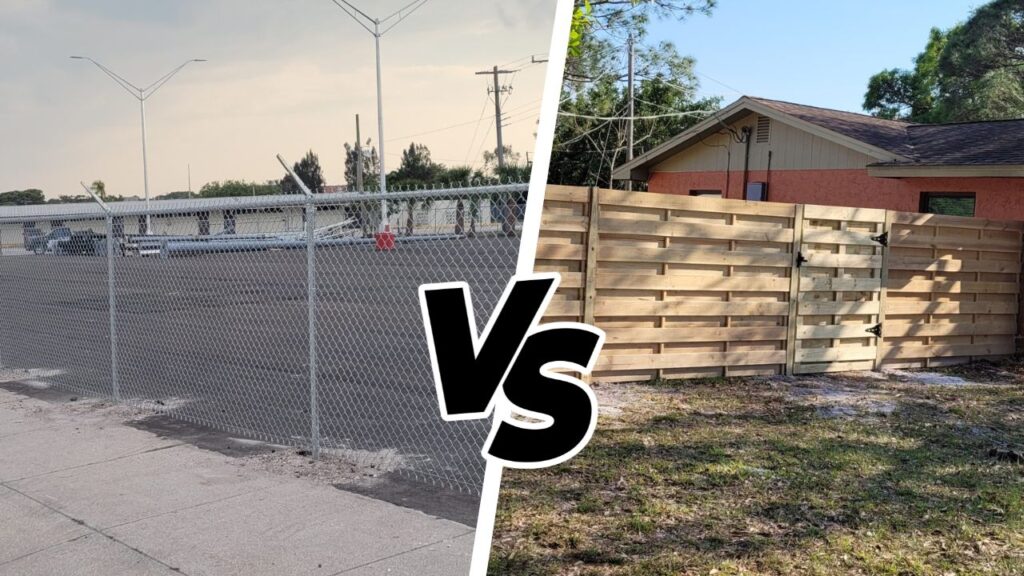
When choosing a fence, it’s not just about looks—it’s about purpose, budget, durability, and maintenance. If you’re stuck deciding between a chain link vs wood fence, you’re not alone. These two materials are among the most popular in both residential and commercial fencing, and each has its strengths depending on your goals.
Have questions? Consult with a professional here: St. Petersburg Fence Repair
At Incafence, we’ve helped hundreds of homeowners and property managers compare wood vs chain link fences based on their location, needs, and preferences. This guide breaks down the pros, cons, and key differences so you can make the most informed decision before you build.
Why Material Matters When Choosing a Fence
A fence isn’t just a barrier—it’s an investment. Whether you’re concerned about keeping pets safe, improving curb appeal, or adding privacy, the material you choose will directly impact:
- How much you’ll spend up front and over time
- The level of security and privacy you’ll get
- How much maintenance your fence will need
- How it holds up to weather and aging
- The impression it gives to neighbors, guests, or buyers
That’s why comparing chain link vs wood fence options isn’t just about aesthetics. It’s about choosing the fence that fits your lifestyle, budget, and goals.
Chain Link Fence Overview
Chain link fences—also known as wire mesh or hurricane fences—are made from galvanized steel wires woven into a diamond pattern. They’re commonly used in backyards, commercial spaces, and industrial properties due to their durability and affordability.
Pros of Chain Link Fences
- Affordability:
One of the most cost-effective fencing options on the market. Great for large areas. - Low maintenance:
Galvanized or vinyl-coated wire resists rust and requires very little upkeep. - Durability:
Withstands wind, rain, and pests. Ideal for high-traffic or high-impact areas. - Visibility and security:
Allows you to see through while creating a boundary—great for pets and monitoring activity. - Quick installation:
Faster and easier to install than many other materials, especially over uneven terrain.
Cons of Chain Link Fences
- Lack of privacy:
Without add-ons like privacy slats, it offers minimal visual barrier. - Industrial appearance:
May not offer the warm, residential look some homeowners want. - Limited style options:
Comes in a few finishes and colors, with minimal opportunity for design customization.
Wood Fence Overview
Wood fences are a classic choice, loved for their natural beauty, versatility, and ability to provide full privacy. They’re commonly seen in residential neighborhoods, gardens, and front yards.
Pros of Wood Fences
- Natural aesthetic:
Offers warmth, charm, and curb appeal. Easily blends with landscaping. - Full privacy:
Solid wood panels (like stockade or board-on-board styles) block both view and noise. - Customizable:
Can be cut, painted, or stained to match your property’s style. Easy to add decorative tops or lattice. - Eco-friendly options:
Sustainable wood choices like cedar and redwood are biodegradable and renewable.
Cons of Wood Fences
- Higher maintenance:
Requires regular sealing, staining, or painting. Prone to rot, warping, and insect damage. - Shorter lifespan:
Even with good care, most wood fences last 10–15 years before needing major repairs or replacement. - More expensive over time:
Lower initial cost than vinyl or metal panels, but long-term care can add up.
Chain Link vs Wood Fence: Side-by-Side Comparison
Now that we’ve reviewed the basics of each fencing type, let’s break down the core differences side by side. This is where the chain link vs wood fence debate gets interesting—because what’s best truly depends on what you need.
Cost: Which Fence Is More Affordable?
- Chain Link:
Chain link fences are typically much cheaper to install. They require less material, and installation is fast and straightforward. If you’re fencing a large area—like a backyard, dog run, or commercial lot—chain link can save you thousands. - Wood:
Wood fences have a lower initial cost than vinyl or metal panel fences, but more than chain link. However, over time, maintenance expenses (sealing, staining, repairs) can drive up the total investment.
Verdict:
For affordable fence options, chain link wins.
Maintenance: What’s Easier to Care For?
- Chain Link:
Maintenance is minimal. A simple rinse once or twice a year, and occasional rust checks (especially for older, non-coated chain link). - Wood:
Requires consistent upkeep to stay protected against rot, termites, and moisture. You’ll likely need to stain or seal it every 2–3 years, and replace damaged boards regularly.
Verdict:
Chain link is the clear winner for low-maintenance needs.
Privacy and Security: Which One Performs Better?
- Chain Link:
By default, chain link fences are transparent. You can add privacy slats or mesh screens, but they come at an additional cost. They do well at keeping pets in or deterring intruders, but they don’t hide your space. - Wood:
Wood fences offer full visual privacy. Tall panels can block views and reduce noise, making them ideal for backyards, patios, or pool areas. They also offer a strong physical barrier.
Verdict:
Wood fences provide better privacy and a more secure, enclosed feel.
Durability: Which One Lasts Longer?
- Chain Link:
With proper coating (galvanized or vinyl), chain link can last 20–30 years with little to no repairs. - Wood:
A well-maintained wood fence may last 10–15 years, but that lifespan depends heavily on climate, wood type, and upkeep.
Verdict:
In terms of long-term durability, chain link comes out ahead.
Aesthetic Appeal: Which Looks Better?
- Chain Link:
Practical, but basic. Great for functionality, but not for style. Vinyl-coated chain link (usually black or green) can look more polished, but the options are limited. - Wood:
Offers rich, natural beauty that enhances landscaping and boosts curb appeal. Can be styled with post caps, lattice tops, or custom cuts.
Verdict:
Wood wins for classic aesthetics and customization.
Quick Summary Table: Fence Material Comparison
| Feature | Chain Link Fence | Wood Fence |
| Cost | ✅ Most affordable | ❌ Moderate upfront cost |
| Maintenance | ✅ Very low | ❌ High maintenance required |
| Privacy | ❌ Minimal (add-ons only) | ✅ Full privacy panels |
| Durability | ✅ 20–30 years | ❌ 10–15 years |
| Aesthetics | ❌ Basic appearance | ✅ Natural, customizable |
| Installation | ✅ Fast and easy | ❌ Labor-intensive |
What Fence Material Is Best for You?
So—wood or chain link? The right answer depends on your goals.
Here’s how to think about it:
Choose a Chain Link Fence If You Need:
- An affordable fencing solution for a large space
- A low-maintenance option with minimal upkeep
- A practical barrier for pets, children, or security
- Something that doesn’t block views (or if you’re willing to add privacy slats)
- A quick installation timeline
Best for:
Commercial lots, dog runs, backyard boundaries, budget-conscious projects.
Choose a Wood Fence If You Want:
- Full privacy and sound reduction
- A fence that enhances curb appeal and matches your home’s style
- More design flexibility with stains, paints, and custom finishes
- An eco-friendlier material (if sustainably sourced)
- A cozy, enclosed backyard feel
Best for:
Residential homes, gardens, patios, pool areas, and front yards with high visibility.
Need Help Deciding? Contact Incafence Today
At Incafence, we know that choosing the right fence isn’t just about materials—it’s about lifestyle, property goals, and long-term value. Whether you lean toward the natural look of wood or the practicality of chain link, we can help you:
- Compare cost, durability, and design
- Review fence regulations in your area
- Choose the perfect height, style, and finish
- Install your fence professionally and quickly
- Maintain or upgrade your existing fencing over time
Ready to start your project?
👉 Get a free estimate from Incafence and let our team guide you toward the fence that fits your space, your needs, and your budget.